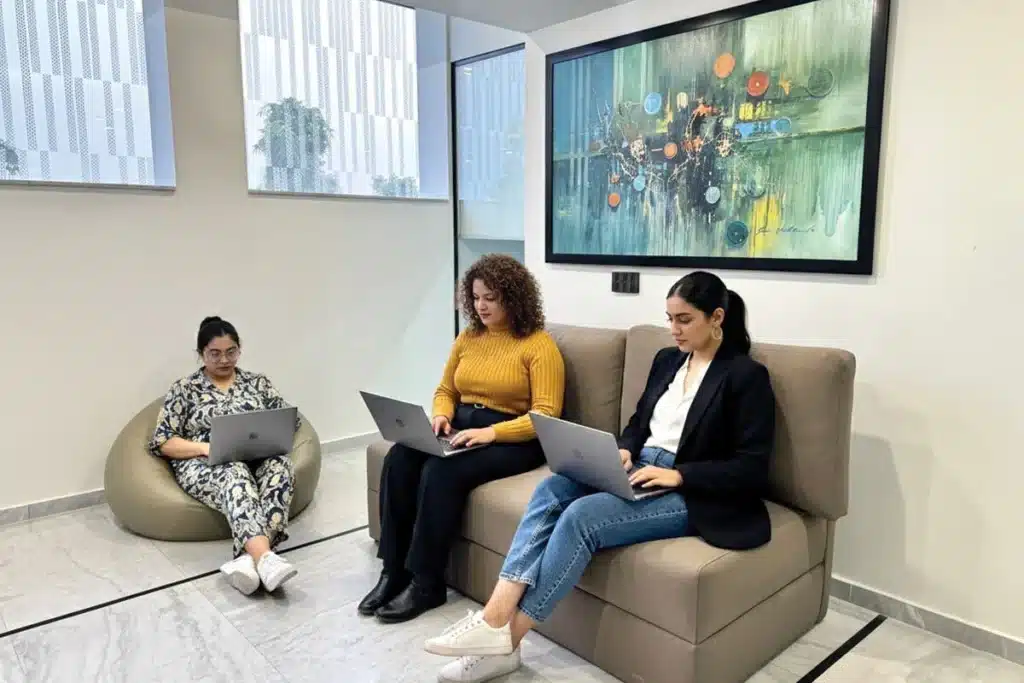
Renting a proper office in Lahore is just painful now. You’re signing papers for years, putting down deposits that could fund half your business, and then there’s furniture, internet setup, WAPDA bills, and finding cleaning staff; it never ends. Coworking showed up and basically said, Forget all that hassle. You pay monthly, walk in, sit […]
Remote work promised balance and flexibility, but for many, it’s become a quiet productivity trap. Studies show that over 60% of remote professionals struggle to maintain focus beyond the first few hours of the day, and the line between work time and home time has almost disappeared. That’s why more remote workers are moving to […]
Renting a proper office in Lahore is just painful now. You’re signing papers for years, putting down deposits that could fund half your business, and then there’s furniture, internet setup, WAPDA bills, and finding cleaning staff; it never ends.
Coworking showed up and basically said, Forget all that hassle. You pay monthly, walk in, sit down, and work. The Internet’s already there. AC works. Somebody else handles the headaches.
Traditional office? You’re paying rent, then electricity, then internet, then maintenance, then this, then that. It adds up fast, and most of it has nothing to do with your actual work.
Budget coworking spaces bundle everything together. One price, everything included, no surprises. That’s the whole point.
Different Types of Workspaces You’ll Find
Every coworking space offers different setups. Picking the wrong one is uncomfortable and expensive. Here’s what’s actually out there.
Hot Desks Are Basically Musical Chairs for Adults
You show up, grab whatever desk is open, work, and leave. Tomorrow you might sit somewhere else. It’s cheap because you’re not claiming permanent territory.
This works if you’re not there every day or you don’t care about having “your spot.” Some people love the variety. Others find it annoying to pack up everything daily.
Same desk every time. You can leave your extra monitor there, stick photos up, whatever. It’s yours until you decide to go.
Costs more than hot desking but less than getting your own office. A good middle ground if you need consistency but don’t want walls around you.
Private Offices When You Actually Need Privacy
Small rooms that fit a few people. Proper door, some privacy, quieter. Necessary if you’re on calls constantly or handling confidential stuff.
Split between even two people and private offices becomes reasonable. Still way cheaper than renting commercial space yourself.
How to Spot Actually Affordable Spaces vs Traps
Some places advertise low prices, then hit you with random charges for everything. Here’s how you avoid getting played.
Read the Fine Print About What’s Included
Ask straight up – does the monthly fee include internet? Printing? Meeting rooms? Or are those extra? Because if everything’s additional, that “cheap” membership isn’t cheap anymore.
Check about electricity too. Some places charge by the unit during the summer when ACs are running full blast. That bill can shock you.
Location Costs More, But Sometimes Saves You Money
Cheaper space in some far corner of Lahore sounds great until you’re spending two hours in traffic each way. Your time and fuel cost money, too.
Spaces in Johar Town or Gulberg cost more upfront, but if you’re saving travel time and fuel, you might come out ahead. Do the actual math.
Why Month-to-Month Agreements Changed Everything
Commercial leases here are brutal. Sign for a minimum of 3 years, pay 6 months upfront, and make a massive deposit. If your situation changes, tough luck.
Growing Without Getting Stuck
Started alone at a hot desk last year? Now you’ve got two people and need dedicated space? Next year, you’ll need a private office.
Try doing that smooth transition with regular office leases. You’d be signing new agreements, moving, and dealing with multiple landlords. With coworking, you just switch plans.
Actually Checking Out a Space Before Joining
Don’t just take a quick tour and sign up. You need to work there properly first to know if it’ll actually work.
Test the Internet During Rush Hours
They’ll tell you the internet is fast. Great. Show up when the place is packed and test it yourself. Open big files, hop on a video call, see what happens.
Ask if they’ve got backup connections. One ISP goes down in Lahore, and suddenly nobody can work? That’s a problem.
Pay Attention to Who Else Works There
Spend a few hours there. Are people actually working, or is it social hour all day? Is it quiet enough for you to focus?
Some spaces attract serious professionals. Others turn into hangout spots. Neither is wrong, but one fits you better.
Check the Basics Everyone Forgets
Bathrooms clean? Is the furniture actually comfortable, or will your back hurt after an hour? Can you hear every conversation happening nearby?
These small things wreck your day when they’re misplaced. You won’t notice them on a quick tour, but you’ll see them every single day after joining.
Getting Real Value from Shared Workspaces
Just showing up and sitting there isn’t the point. Here’s how people actually benefit from coworking.
Meeting People Without Being Weird About It
Nobody likes forced networking. Relax. Work on your stuff. You’ll naturally chat with people around you over time.
Some of my best business contacts came from random conversations, not formal networking events. Just be normal.
Staying Focused in Open Spaces
Worried about distractions? Headphones solve most of it. Most people in coworking spaces respect that everyone’s trying to work.
If you genuinely need dead silence, check whether they have quiet zones or phone booths for calls.
Cheap Doesn’t Have to Mean Shabby
Budget-friendly and low-quality aren’t the same thing. Plenty of affordable spaces maintain proper standards.
Don’t Compromise on Safety and Cleanliness
The space should be secure and clean. Period. If management can’t handle basic safety and hygiene, it doesn’t matter how cheap it is.
What Actually Doesn’t Matter Much
Do you need a fancy lobby? Probably not. Free unlimited coffee? Nice but not essential. Focus on what affects your actual work.
Coworking Across Different Lahore Neighborhoods
You don’t have to stick to Gulberg or DHA anymore. Options are spreading across the city.
Neighborhood Spaces Often Beat Central Locations
Gulberg has fancy spaces, but you pay for that location. Meanwhile, Johar Town, Model Town, and even Wapda Town are seeing solid coworking spaces pop up.
Newer Spaces Can Be Smart Choices
Don’t automatically ignore recently opened spaces. They often have newer infrastructure, competitive pricing, and management that’s hungry to keep members happy.
Understanding How Pricing Actually Works
Pricing models vary enough that you need to understand what you’re comparing.
All-In Versus Pay-As-You-Go
Some spaces include everything in one monthly price. Others have a base rate, then charge for meeting rooms, printing, and whatever else.
All-inclusive is simpler. Pay-as-you-go works if you genuinely don’t use those extras. But tracking usage gets annoying fast.
Part-Time Memberships Make Sense for Some People
Only need office space twice a week? Part-time memberships exist. Why pay for full-time access you won’t use?
Day passes work too if your needs are really occasional. Come in, pay for the day, leave.
The People Part of Coworking
Physical space is half of it. The other people there matter too.
Learning Just from Being Around Others
Being surrounded by other professionals means you pick up stuff passively, like how someone else handles a problem. A contact they mention. An approach you hadn’t considered.
Projects and Referrals Happen Organically
Sometimes, coworking members collaborate or share work. A designer needs a developer. A consultant knows someone looking for what you offer.
Conclusion
Choosing a low-cost workspace is really about giving yourself room to work properly. A separate desk, a quieter environment, and a professional-looking space make everyday tasks easier. If you want something practical and steady without paying silly prices, WorkPod is one of the few spots that actually delivers on its promise.
FAQS
What exactly am I getting for the monthly fee?
Depends on the space. The most affordable places include your desk or workspace, internet, electricity, and access to common areas. Meeting rooms might be included for specific hours or cost extra. Kitchen and bathroom facilities are standard. Always ask specifically what’s covered before you pay anything. Some places sneak in charges for stuff you’d assume was included.
Can I change my membership if things change?
Yeah, that’s the whole point of coworking. Most places let you move between a hot desk, a dedicated desk, or a private office based on what you need. Going up is usually smooth. Downgrading might require some advance notice, but it’s doable. Way better than being locked into a lease that no longer fits.
Is my stuff safe there?
Basic security, such as entry systems and cameras, is standard, but you’re still responsible for your belongings. Hot desk users typically can’t leave stuff overnight. Dedicated desk members might get lockers or storage. If you’ve got expensive gear or sensitive documents, ask directly about security measures and storage before joining.
Remote work promised balance and flexibility, but for many, it’s become a quiet productivity trap. Studies show that over 60% of remote professionals struggle to maintain focus beyond the first few hours of the day, and the line between work time and home time has almost disappeared.
That’s why more remote workers are moving to flexible coworking environments, not for the coffee or fancy chairs, but for structure, separation, and community. The change is measurable: higher output, faster turnarounds, and noticeably better mental health.
Because sometimes, long-term success isn’t about discipline, it’s about designing the right space to make discipline easier.
Nobody’s saying working from home is terrible. For about six months in 2020, it felt revolutionary. No pants required for Zoom calls, zero commute time, and your dog as a coworker. Perfect.
Here’s what nobody mentions in those digital nomad Instagram posts: your brain struggles with mixed signals. That couch where you binge-watch shows at night? Your subconscious doesn’t suddenly respect it as a productivity zone at 9 AM. The bedroom where you sleep? Not exactly screaming quarterly reports and client calls.
Environmental psychology has proven this for decades. Our brains create associations between spaces and activities. When everything happens in the same 800 square feet, those boundaries get messy fast.
Then there’s the isolation factor. Humans are social creatures, even the introverts among us. Going days without meaningful face-to-face interaction? That takes a toll. You don’t notice it immediately; it’s gradual, like a slow leak in a tire. One day, you realize you’ve had full conversations with your houseplants, and you’re genuinely wondering if they’re judging your life choices.
What Actually Makes Coworking Different This Time
Coworking isn’t new, but it’s evolved beyond the hipster coffee shop aesthetic and bean bag chairs of 2015. Places like WorkPod have figured out what remote workers actually need versus what looks good on Instagram.
The environment matters more than we admit. Proper lighting isn’t about aesthetics; it directly affects your circadian rhythm, mood, and cognitive function. Natural light reduces eye strain, headaches, and that 3 PM energy crash. When you’re in a space designed with these factors in mind, you’re working with your biology, not against it.
Then there’s the equipment factor. Sure, you could buy an ergonomic chair, a standing desk, proper monitors, and high-speed internet for your home. But that’s a significant investment, and if you’re renting or moving frequently, it’s not always practical. Shared workspaces provide all of this without the capital expense.
The Hidden Benefits Nobody Talks About
Your Mental Health Will Thank You
Depression and anxiety rates among remote workers have spiked since 2020. Not because remote work is inherently problematic, but because isolation compounds existing mental health challenges.
When you’re surrounded by other people, even if you’re not directly interacting with them, there’s a background hum of human energy that matters. It’s why students often study better in libraries than alone in their rooms. The presence of others working creates accountability and motivation that’s hard to replicate alone.
Plus, having a reason to shower and leave your house regularly? Underrated. It sounds silly, but maintaining basic routines becomes harder when there’s no external structure to demand them. A physical workspace gives you that structure without the corporate rigidity.
Your Productivity Gets Weirdly Competitive In a Good Way
There’s this phenomenon in coworking spaces where productivity becomes contagious. You see someone grinding through their tasks, and suddenly, your random scrolling feels uncomfortable.
It’s peer pressure without the pressure. Nobody’s watching your screen or tracking your hours, but being surrounded by professionals who are locked in on their work naturally elevates your own focus. You start matching the energy in the room.
The nap areas and relaxation zones actually boost this effect rather than undermining it. When everyone can see that breaks are normalized and encouraged, you don’t feel guilty about stepping away for 15 minutes. You come back sharper. That’s how sustainable productivity actually works.
Networking Happens Organically
Forced networking events feel like speed dating for business cards. Awkward, transactional, and rarely leading to genuine connections. But when you’re sharing a space with people day after day, relationships develop naturally.
The freelance writer ends up chatting with the app developer over coffee. Turns out the developer needs content for their website. The writer needs someone to build her portfolio site. Collaboration happens because trust was built gradually, not because someone handed over a business card and said, “Let’s connect.”
These spaces often host community events, workshops, skill-sharing sessions, and casual meetups. The difference is you’re not walking into a room of strangers. You’re joining people you’ve already shared space with. The barrier to entry drops dramatically.
Your Work-Life Balance Actually Balances
The biggest mind-shift happens when you physically leave work at work. Your commute might only be 20 minutes, but that transition time matters. It’s a buffer that lets your brain shift gears.
When you work from home, that laptop sitting on your dining table is always there. “Just one more email” at 10 PM becomes routine. Your living space never stops feeling like your workspace. That constant low-level stress of always being “on” is exhausting in ways you don’t fully notice until it’s gone.
Having a separate workspace means when you leave, you’re done. Your home becomes a place actually to live, not just the spot where you also happen to sleep between work sessions.
The Practical Side: What You’re Actually Getting
Modern coworking spaces understand that professionals need more than just desks and Wi-Fi. The good ones provide:
Real tech infrastructure: We’re talking business-grade internet that doesn’t hiccup during video calls. Meeting rooms with actual functioning A/V systems. Security setups that mean you can leave your stuff without paranoia.
Flexibility that works: Not everyone operates 9-to-5 anymore. Some people hit peak productivity at 6 AM. Others don’t get rolling until after lunch. Spaces that accommodate different schedules recognize that productivity isn’t one-size-fits-all.
Amenities that matter: Kitchen facilities so you’re not eating expensive takeout daily. Comfortable lounges for informal meetings or mental breaks. Game areas, because sometimes your brain needs to be disconnected entirely for 10 minutes. Book libraries for when you want to read something that isn’t glowing at you from a screen.
Childcare options: Parents juggling remote work and childcare know the struggle is real. Spaces that provide or partner with childcare services understand that work-life integration is complex and support networks matter.
Why This Matters for Your Career Long-Term
Remote work isn’t a temporary trend; it’s a fundamental shift in how professional life operates. Companies are saving money on office space. Employees are refusing to commute unnecessarily. The gig economy keeps expanding. These forces aren’t reversing.
Coworking spaces solve these problems without forcing you back into corporate office culture. You get the autonomy of remote work with the structure of an office environment. That combination is powerful for people who want independence but also recognize that complete isolation isn’t sustainable.
Your career progression depends on staying sharp, connected, and productive. If your current setup isn’t supporting those things, it’s worth questioning whether you’re setting yourself up for long-term success or just getting by.
The Reality Behind Making the Switch
If you’re considering trying a coworking space, here’s the honest reality: it’s an adjustment. The first week might feel weird. You’re changing established habits, and your brain will resist that initially.
Give it two weeks before deciding if it works for you. That’s about how long it takes for new routines to stop feeling forced. By week three, most people report that going to their workspace feels as natural as their old commute used to, except without the traffic frustration.
Start with a flexible membership. Most spaces offer day passes or part-time options. Test it out before committing fully. Notice how your productivity changes. Pay attention to your mood and energy levels. Trust your gut on whether the environment suits your working style.
The investment pays dividends beyond just productivity. Your mental health improves. Your professional network expands. Your work quality increases because you’re working in conditions designed to support it. These aren’t small benefits; they compound over time into significant career advantages.
Conclusion
Remote work gave us freedom, but freedom without structure often leads to chaos. Working from home sounded perfect until we realized that ‘anywhere’ doesn’t automatically mean ‘optimally’.
WorkPod and similar spaces exist because professionals needed something different, environments that support independent work without the isolation, professional settings without corporate politics, and a community without forced networking.
This isn’t about going backward to traditional offices. It’s about moving forward to something better that respects how people actually work best. If your current setup isn’t serving you, it’s time to try something designed with your actual needs in mind rather than just accepting whatever space happens to be available.
Your workspace affects everything: your productivity, your mental health, and your career trajectory. Choosing one that actively supports your success instead of just housing your laptop? That’s not an expense. That’s an investment in yourself.
How much does coworking actually cost compared to working from home?
Most people spend more time working from home than they realize. Between electricity, internet upgrades, coffee, snacks, and the occasional “I need to get out of here” coffee shop session, costs add up. Coworking memberships typically range from affordable day passes to monthly plans that include everything, utilities, amenities, and professional-grade equipment. You’ll probably find the difference is smaller than expected. Plus, many memberships are tax-deductible as business expenses.
Won’t I get distracted by other people in a shared space?
Interesting thing about distractions, they’re different in coworking spaces versus at home. You’re battling laundry, TV, roommates, and the general comfort of your living space. In a workspace, everyone around you is also working. That shared focus creates accountability rather than distraction. Most spaces also offer quiet zones, phone booths for calls, and varying atmospheres so you can choose what matches your task. The ambient noise of others working often helps concentration more than complete silence.
Is coworking worth it if I’m an introvert?
Absolutely. Being an introvert doesn’t mean you don’t need human interaction; it means you recharge differently than extroverts. Many introverts thrive in coworking environments because interactions are optional and organic rather than forced. You can work independently all day if that’s what you need, but the option for connection exists when you want it. It’s social flexibility without obligation, which actually suits many introverted work styles perfectly.
What if I try it and it doesn’t work for me?
That’s completely valid. Coworking isn’t universal; some people genuinely work better from home, and that’s fine. Most spaces understand this and offer flexible arrangements without long-term commitments. Try it for a few weeks with an open mind. If it’s not improving your productivity, mental health, or work satisfaction, you haven’t lost much. But many skeptical people initially report that the shift was precisely what they needed. You won’t know until you give it a genuine shot.
Connect Now
Hello! Welcome to WorkPod.
Please take a moment to complete the “Enquire now” form below, and we will promptly reach out to assist you.
Hello! Welcome to WorkPod.
Please take a moment to complete the “Enquire now” form below, and we will promptly reach out to assist you.